Higher Performance Insights | THE MIDYEAR MYTH
How To Avoid Your "Fresh Start" Next Week As Just July's Underperformance Wearing A Turtleneck
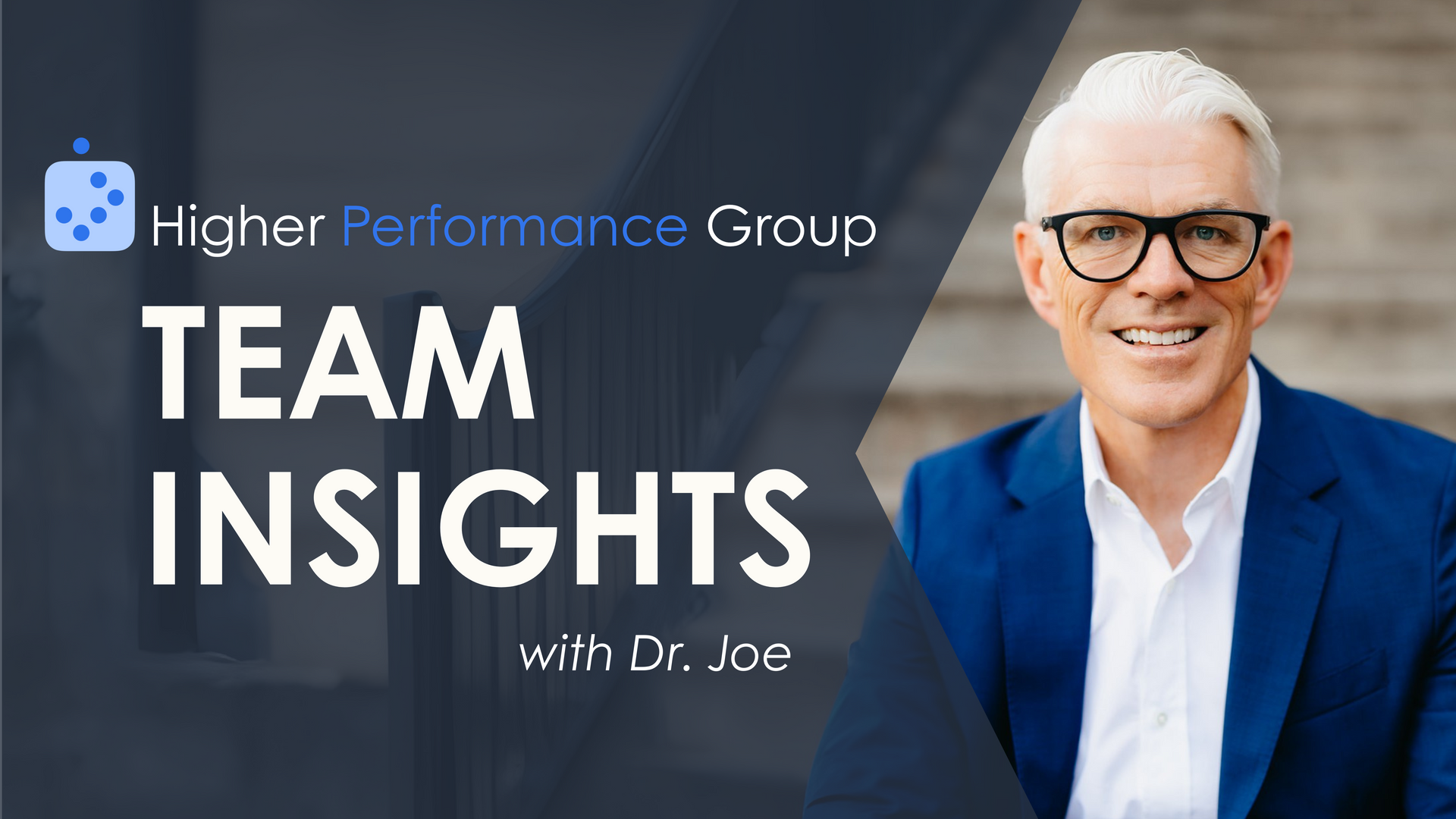
DR. JOE HILL Founder Higher Performance Group
December 31, 2025
The Most Expensive Lie You'll Tell Yourself Next Tuesday
It's December 31st. Your first cabinet meeting is Tuesday, January 6th.
And you already know what's going to happen.
You're going to walk in and do what you've done every January for four years: Pretend the last six months didn't just prove exactly why your next six months will fail.
Here's the math that hurts: That retention initiative from August? Dead by October ($73K wasted). Academic program revision from convocation? Tabled in September ($127K in committee time and consultant fees—poof). "Culture of collaboration" you promised the board? Your cabinet still can't coordinate lunch without territorial violations.
Add it up: $200K+ in failed initiatives from this semester alone.
Not because your team lacks talent. Because you keep building skyscrapers on foundations designed for tool sheds.
Here's the lie you'll tell yourself Tuesday: "This time will be different. We just need to refocus. Renewed energy. Fresh priorities."
And here's the truth you already know but won't say out loud: Your July priorities didn't fail because they were wrong. They failed because your foundation can't support them.
You have four days before that cabinet meeting. Four days to ask yourself one question that could change everything:
What if the problem isn't your priorities? What if you keep attempting Level 5 work on Level 1 infrastructure?
Comment "FOUNDATION" if you're dreading next Tuesday's cabinet meeting and wondering whether anyone else sees what you see.
THE DIAGNOSIS: YOU'RE COSPLAYING STRATEGIC PLANNING
Let's talk about what's really happening.
You're six months in. Enrollment is 6% below projection. (It's always 6%. Why is it always 6%?) Three of your July priorities are effectively dead, but no one has said it out loud yet.
And next Tuesday, you'll gather that same cabinet and ask: "What should our priorities be for semester II?"
As if the answer exists anywhere other than in the data you're about to ignore from the six months you just lived.
Here's what actually happens:
Your CFO will suggest: The budget transparency initiative you launched in August and stopped discussing in October when it became clear nobody actually wanted transparency—just protected territory.
Your CAO will propose: Academic program restructuring that died in September, when it required actual decisions about resource allocation. (Easier to blame "resistance to change" than admit nobody had the courage to make cuts.)
Your VP of Enrollment will float: A "reimagined" recruitment strategy that's basically the August strategy with different adjectives and a Canva template. (Because what failed in fall will definitely work in spring if we just believe harder.)
Someone will say: "What if we focused on just a few key priorities?" (Everyone nods. You'll still end with 14. This is the way.)
By lunch, you'll have a polished document. Strategic priorities in pillars. Impressive-sounding metrics. A timeline requiring 40% more capacity than your team demonstrated having for six months.
Nobody will ask: "Why didn't our July priorities work? What does that gap teach us? What foundation are we missing?"
Asking implies admitting something went wrong. And if someone's responsible, this whole "fresh start" vibe gets uncomfortable.
So instead, you'll create new priorities that will fail for the exact same reasons.
This isn't strategic planning. This is institutional amnesia with better fonts.
Your turn: What's one priority from July that died by Thanksgiving? One word only. Let's see how many of us are living the same pattern.
THE LIE WE KEEP TELLING OURSELVES
Here's the story we'll tell Tuesday: "We just need to refocus. Get back to basics. Prioritize what matters."
Here's the story we know but won't say: Our priorities aren't the problem. Our foundation is.
You launched a retention initiative in August. Required Academic Affairs and Student Services to coordinate. Both divisions nodded enthusiastically at convocation. You felt hopeful.
By October, Academic Affairs was sending students to advisors with schedules that Student Services was unaware of. Student Services was creating support plans that Academic Affairs wasn't tracking. Students got contradictory guidance. Faculty were frustrated. Staff were exhausted from manually bridging the gap.
The initiative didn't fail because people didn't care.
It failed because you have zero infrastructure for cross-divisional coordination.
No clear decision rights. ("Who actually decides when we intervene with a struggling student?")
No escalation pathway when priorities compete. ("Academic Affairs needs faculty time for curriculum revision. Student Services needs faculty time for intervention meetings. Who decides?")
No shared language for resolving conflicts. ("Academic rigor" means different things to Academic Affairs and Student Services, and you've never aligned on it.)
No accountability system that doesn't rely on someone working nights and weekends to manually coordinate.
You tried to run a Level 5 initiative on Level 1 infrastructure.
That's not a priority problem. That's a foundation problem.
━━━━━━━━━━━━━━━━━━━
💡 "You can't strategize your way out of a foundation problem. If your infrastructure can't support what you're building, no amount of renewed focus will matter."
━━━━━━━━━━━━━━━━━━━
And next Tuesday, when you propose a "refined" retention strategy—maybe with better communication protocols, definitely with more frequent check-ins—it will fail again.
Not because your team won't try. Because your foundation can't support what you're asking it to carry.
60% capacity. 100% workload. Zero infrastructure.
You can't strategize your way out of that math.
WHAT WE'VE BEEN BUILDING WHILE YOU'VE BEEN STUCK
While your cabinet was trapped in the July→December cycle, we spent 18 months building the systematic solution.
THE TEAM INSTITUTE officially launches in January 2026.
It's not another leadership development program. It's the infrastructure underneath strategy—the 8-session sequential system that transforms 60% capacity cabinets into multiplication engines.
We've piloted this with 47 leadership teams across K-12 and higher ed:
- 3X performance improvement
- 29% higher engagement scores
- 27% better organizational outcomes
- Zero burnout increase despite performance multiplication
The framework addresses what every leadership program ignores: You can't skip foundational stages.
You can't attempt Level 5 work (managing change, resolving conflicts, developing others) on Level 1-2 infrastructure (inconsistent trust, basic reliability).
The Team Institute builds sequentially:
01 - Base Camp → Understanding your team's {BEST FIT} profile 02 - Building Trust → The foundation for everything else 03 - Empowerment → Authority + clarity + confidence 04 - Collaboration → Creating something better together 05 - Broadening Influence → Leading beyond your position 06 - Managing Change → Leading transformation without casualties 07 - Managing Conflict → Using friction as refinement 08 - Developing Others → Multiplying the talent within
Each session builds on the previous foundation. You can't skip trust and go straight to empowerment—that's abandonment, not leadership.
Early bird enrollment opens January 6th. All consultations booked before January 12th receive early adopter pricing.
But whether you join or not, you can use the next four days to break your cycle...
[SCHEDULE A TEAM INSTITUTE DISCOVERY CALL TODAY]
THE FRAMEWORK: Three Questions To Ask Before Tuesday
You have four days. Use them.
Pull out last July's strategic priorities right now. Ask yourself these three questions. Alone. Honestly.
Question 1: What Did We Actually Attempt July-December?
Not what's in the strategic plan document. What did you ACTUALLY attempt?
Which priorities did you really try to execute? Include the quiet ones that never made it into official documents:
"We tried to get the cabinet to communicate honestly instead of performing collaboration in meetings and having real conversations in the parking lot."
"We hoped department chairs would step up so we could stop being the bottleneck."
"We wanted to feel less reactive and more strategic." (You spent November in crisis mode. Again.)
Write them down. All of them. No judgment. Just data.
Question 2: Where Did Things Actually Stall?
Without blame. Without immediately jumping to fixes.
Just notice: Where did things not work?
- The retention initiative requiring coordination you don't have infrastructure for?
- The "data-driven decision making" you abandoned in September when enrollment dropped, and you made cuts based on politics instead of data?
- The "empowering middle leadership" until they made a hiring decision, and your cabinet overruled them because "we need to be strategic" (translation: "we don't trust you")?
Just see the pattern.
Question 3: What Is This Revealing About Our Foundation?
What foundation are we missing that would make these initiatives actually possible?
Not "what's wrong with us." Not "who's to blame."
What infrastructure gaps do these failures reveal?
Old story: Our retention initiative failed because people won't coordinate.
New story: Our retention initiative revealed we have no system for cross-divisional coordination. We expected collaboration through wishful thinking. We can't fix retention until we build coordination infrastructure.
Old story: We're not really data-driven.
New story: Under pressure, we default to politics because we've never practiced data-driven decisions when stakes are low. We need to build that muscle before the next crisis.
Old story: Our middle leaders can't handle responsibility.
New story: When we tried to empower them, our cabinet took control back. That's not a middle leadership problem. That's a cabinet trust problem.
See the difference?
If you're seeing foundation gaps everywhere—trust issues, coordination breakdowns, decision paralysis—you're not alone.
73% of leadership teams in our research operate at Level 1-2 foundation while attempting Level 5 work.
This is exactly what The Team Institute was designed to solve. Not through weekend retreats. Through 8 months of sequential, collective capability building with sustained accountability.
Early bird discovery calls open January 6th. All consultations booked before January 12th receive early adopter pricing.
[GET THE TEAM INSTITUTE DETAILS HERE]
THE CASE STUDY: The President Who Stopped Pretending
Let me tell you about Eric (not his real name, but Eric, you know who you are).
December 2023. Four days before his first cabinet meeting. Absolutely dreading it.
For three years, he'd done the same thing every January: Project optimism. Create "renewed priorities." Watch them die by March. Wonder what was wrong.
This time, he did something different.
He pulled out his July 2023 priorities. All twelve. He asked: "What did this teach me about my foundation?"
The answer was brutal: His cabinet couldn't coordinate across divisions. Not because they were incompetent. Because he'd never built the infrastructure that makes coordination possible.
So in January 2024, Eric said something nobody expected:
"We're not creating new priorities for January-June. We're building the foundation that makes priorities possible."
His CFO looked confused. "What does that mean?"
Eric: "It means I've spent three years watching initiatives fail because we have no system for cross-divisional work. No clear decision rights. No escalation pathways. No way to resolve conflicts without making me the bottleneck. January through June, we're building that infrastructure. Then in July, we'll launch priorities our foundation can actually support."
His board pushed back: "What will we tell stakeholders?"
Eric: "We're going to tell them we're building the capacity to actually accomplish what we commit to—which is more honest than launching priorities we can't execute and explaining next December why they didn't work. Again."
They spent January-June 2024 on foundation work:
- Clarifying decision rights
- Building coordination protocols
- Practicing difficult conversations when stakes were low
- Creating accountability that didn't rely on heroic effort
July 2024, they launched five priorities. Not twelve. Five.
By December 2024:
All five were complete or on track. Zero quiet deaths. Zero "we need to realign."
Student retention up 11%. Faculty satisfaction up 18%. Staff turnover dropped by a third.
Not because Eric became a better strategic planner. Because they built the foundation that makes plans possible.
Eric told me, "I spent three years trying to strategize my way out of a foundation problem. The moment I admitted we needed to build differently—not plan better, but actually build the infrastructure—everything changed."
━━━━━━━━━━━━━━━━━━━
💡 "The question isn't whether your cabinet has talent. The question is whether they've built the collective infrastructure to multiply that talent before communities stop tolerating 60% results."
━━━━━━━━━━━━━━━━━━━
YOUR MOVE: Four Days To Break The Cycle
You have four days.
Option 1: Do what you've always done.
Walk into Tuesday's meeting. Create 10-14 "renewed priorities." Watch them stall by March. Call it a "strategic pivot" in June. Repeat next January.
Option 2: Use these four days to get honest.
Pull out July's priorities. Ask the three questions. Walk into Tuesday and say:
"Before we create new priorities, let's examine what the last six months tried to teach us about our foundation."
Option 1 is easier. Familiar. Expected.
Option 2 is terrifying. It means admitting something fundamental isn't working.
But here's what I know after 25 years with 987 leadership teams:
Five years from now, you'll either still be in this cycle—or you'll have built different.
60% capacity. 100% workload. Zero sustainability.
The industrial model gave you that math. Then told you to fix it with better planning.
BUILD DIFFERENT means stopping the cycle.
WHAT TO DO RIGHT NOW
Poll: Where does your cabinet actually operate?
👍 = Level 1-2 (Unreliable/basic trust, hero-dependent) ❤️ = Level 3-4 (Consistent integrity, functional systems) 💡 = Level 5 (Institutional trust culture, multiplication engines)
Then:
→ Repost this with your honest answer: "What's one priority from July that died by Thanksgiving?" (One word only.) Tag me.
→ Tag a cabinet member who's ready for the foundation conversation
→ Screenshot the Three Questions and text to your CFO: "Read this before Tuesday."
→ Download The Team Institute framework: [Get the PDF]
→ Schedule a discovery call if you're ready to build differently: [Book Your Consultation] — All calls before January 12th receive early adopter pricing.
Follow DR. JOE HILL and Higher Performance Group for weekly Team Intelligence insights.
P.S. — THE TEAM INSTITUTE: Early Bird Opens January 2nd
If your January-June priorities require foundation you don't have—and you're ready to build it systematically—let's talk.
The TEAM INSTITUTE isn't another strategic planning framework. It's the 8-month infrastructure system that determines whether your team can execute what it commits to.
What's included:
- Comprehensive discovery & Team {BEST FIT} mapping
- Team 360 baseline and follow-up
- Eight monthly 2-hour facilitated sessions
- Between-session practice with accountability
- Executive coaching for senior leaders
The commitment: Full leadership team participation—no exceptions.
Early bird opportunity: All discovery consultations before January 12th receive early adopter pricing + priority cohort placement.
[SCHEDULE YOUR 30-MINUTE CALL]
You can't plan your way out of foundation problems.
You have to BUILD DIFFERENT.
Book your call: [SCHEDULE HERE] Download framework: Learn more: https://www.higherperformancegroup.com/team-institute
NEXT ISSUE (January 7th):
"Your Cabinet Treats Coordination Like Telepathy (And Wonders Why Nothing Works)"
Why educational leaders keep launching cross-divisional initiatives without building coordination infrastructure, then blame "resistance to change" when nothing aligns.
Spoiler: You're not having a people problem. You're having a physics problem. And physics doesn't care about your strategic plan.
—Joe
P.P.S. — If this helped you see something differently, repost it with your biggest takeaway. Your network needs this too.
We're building a movement of campus leaders who refuse to accept that 60% capacity is sustainable.
#HigherEdLeadership #K12Leadership #TeamIntelligence #BuildDifferent #EducationalLeadership #TheTeamInstitute
Do you want more leadership topics and guides?
Join THE GROUP
An online community for higher education leaders, where we offer a library of lessons and guides that can be utilized during your leadership sessions and other resources.
Help Spread the Word
If you found value in this post, we’d love your help spreading the word! Please consider sharing this on your favorite social media platform and tag Higher Performance Group and Dr. Joe Hill. Your support helps us reach and inspire more awesome people like you!
Like What You've Read?
Get practical, research-based ideas to Accelerate
Higher Team Performance delivered straight to your inbox every Tuesday.
More Blog Articles