Research Library
Evidence-Based Insights for Campus Leaders
Research-backed frameworks on Team Intelligence and leadership systems that scale. Better practices for developing healthy teams and highly reliable institutions.

State of Education in America: K–12 and Higher Education
A Q2 2026 research brief examining the current state of education across K–12 and higher education in America. Synthesizes findings from over 1,050 leadership team analyses to surface systemic trends, performance gaps, and institutional opportunities. Explores how leadership culture, team capacity, and organizational intelligence converge to shape student outcomes, retention, and long-term institutional health.
.png)
2025–2026 State of Campus Culture Report
Findings from a national study of 1,050 educational leadership teams in K–12 and higher education. Analyzes the current state of campus leadership culture, showing a decline in average team capacity and identifying how leadership culture directly impacts institutional outcomes such as enrollment, retention, and strategic execution. Outlines key factors affecting performance and highlights three organizational trajectories: improving, plateauing, and declining teams.
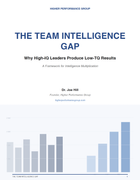
The Team Intelligence Gap
Addresses why high-performing leadership teams underperform, not from lack of talent, but from fragmented intelligence. Introduces the TQ Model (IQ × EQ × PQ), illustrating how cognitive, emotional, and positional intelligence must integrate to achieve team effectiveness. Includes seven core competencies, five lead measures, and a four-stage development pathway with diagnostic tools to advance institutional performance and achieve sustainable excellence.
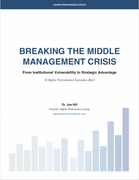
Breaking the Middle Management Crisis
Reveals how neglecting middle managers (deans, principals, and directors) creates hidden costs and weakens educational performance. Most systems train executives but ignore the “invisible middle,” where strategy fails. Introduces Team Intelligence (TQ), combining IQ, EQ, and PQ, to rebuild collective performance. Schools adopting TQ achieved measurable gains in retention, engagement, and student outcomes.
State of Education in America: K–12 and Higher Education
A Q3 2025 research brief examining the current state of education across K–12 and higher education in America. Synthesizes findings from leadership analyses nationwide to reveal systemic challenges, performance trends, and strategic opportunities. Explores how institutional culture, leadership capacity, and team intelligence shape student outcomes, retention, and long-term organizational health.
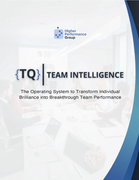
{TQ} | Team Intelligence
An assessment that helps campus leadership teams measure and develop their collective intelligence. Built at the intersection of Perceptual (PQ), Intellectual (IQ), and Emotional Intelligence (EQ), TQ reveals how well teams use diverse thinking styles, communicate, and execute together. Provides a shared language that improves team dynamics, decision-making, and institutional outcomes.
Team Insights with Dr. Joe
Don’t just read the research: live it.
Subscribe to the Higher Performance Team Insights blog for weekly frameworks, field-tested strategies, and leadership intelligence you can apply on Monday morning.
Free Download
Research Report
You're all set!
Your download is starting now.
Check your inbox for a copy.